Responsible Furniture Manufacturing: Our Sustainable Approach
Sustainability is not a fixed milestone for us—it is an ongoing process of learning, refining, and strengthening the way we design and manufacture our furniture. It requires collaboration, transparency, and a willingness to work closely with partners who share the same long-term outlook.
During a recent visit to one of our manufacturing partners in Portugal, we saw first-hand how responsible production is embedded throughout the factory’s operations. Rather than treating sustainability as a separate initiative, it is integrated into everyday processes, from material selection to finishing and waste management.
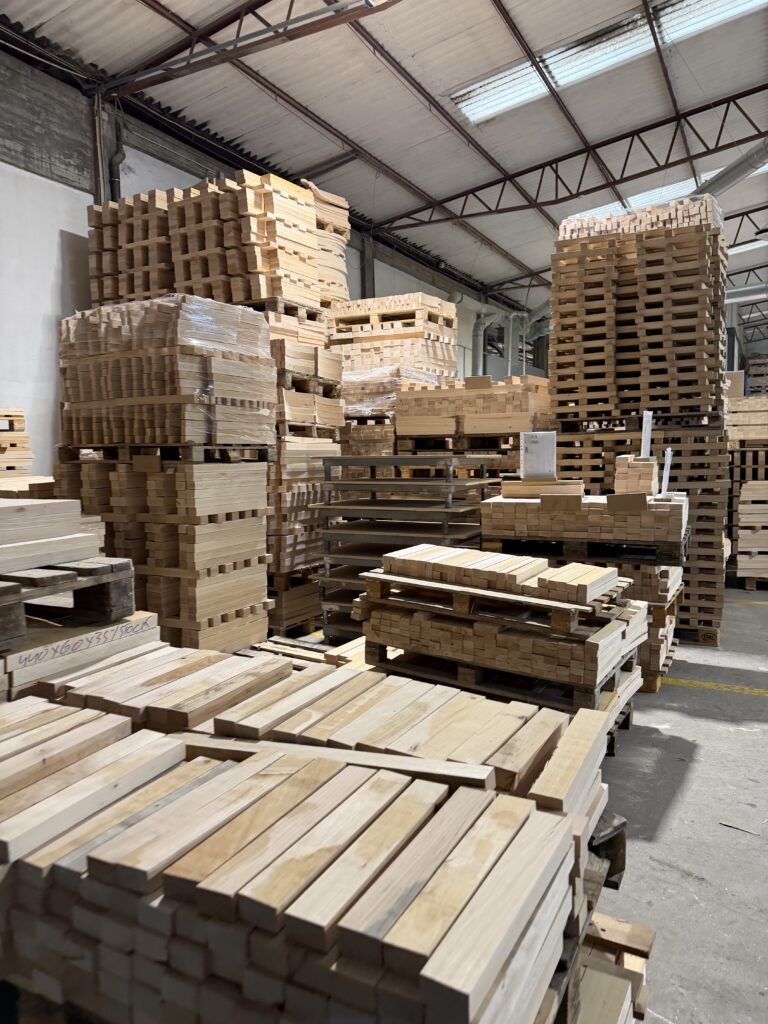
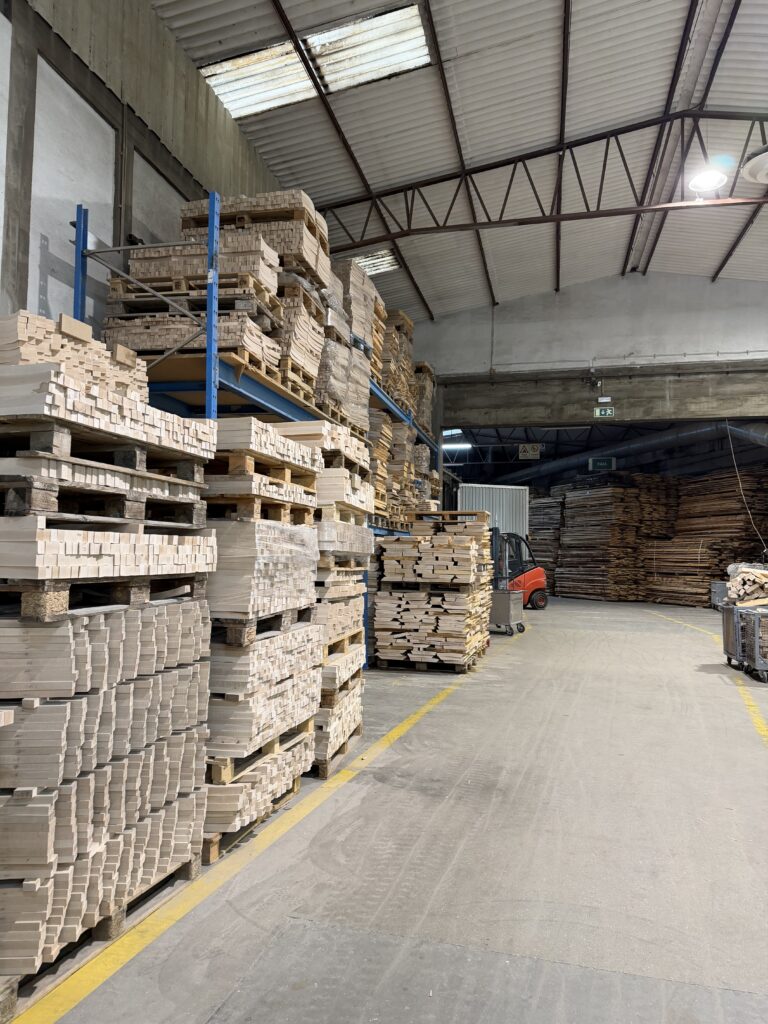
A key element of this approach is the use of responsibly sourced wood, ensuring raw materials are procured with consideration for environmental impact and long-term forest stewardship.
However, what stood out most during our visit was the factory’s finishing process. The facility operates advanced water curtain paint booths, designed to capture paint overspray within a continuous flow of water. This system significantly reduces airborne emissions, helping to maintain cleaner air within the factory while creating a more controlled and consistent finishing environment. By trapping overspray before it can disperse into the atmosphere, the process not only improves air quality but also contributes to a safer and healthier workspace for employees.
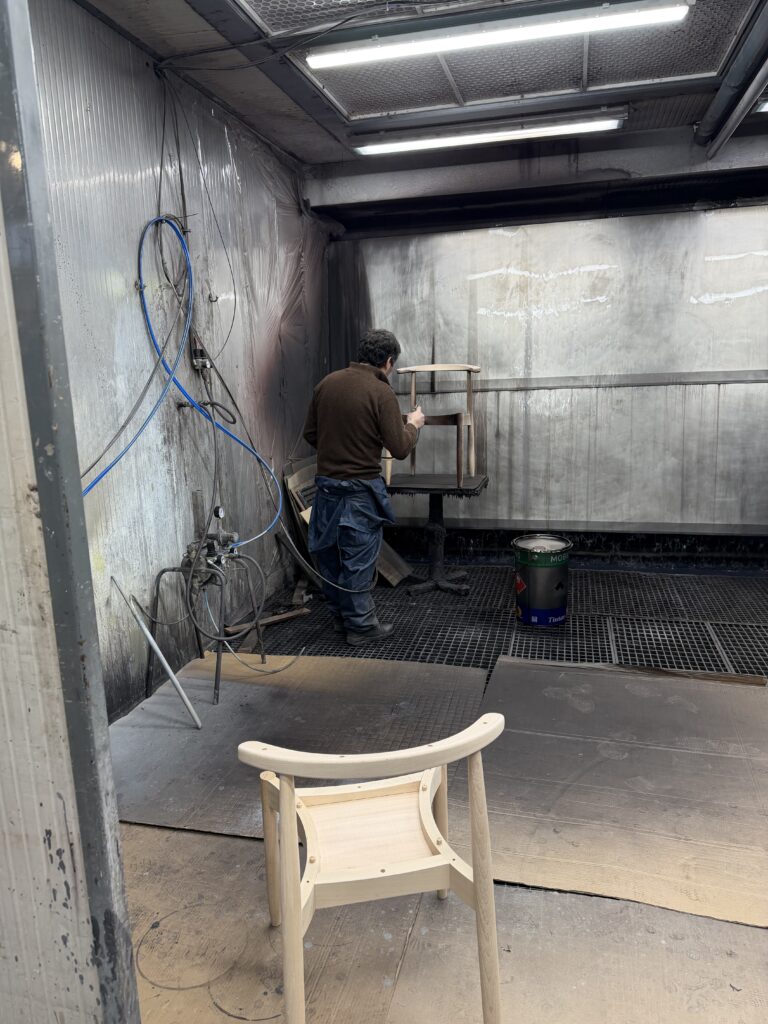
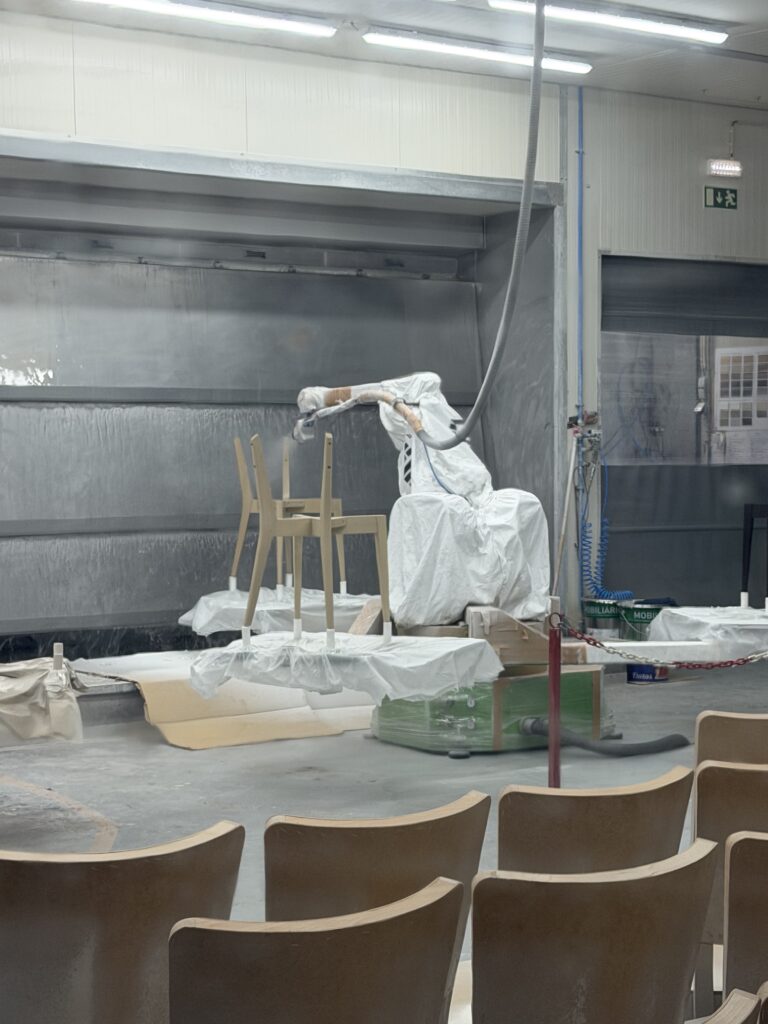
The environmental benefits extend further. The water used within the booths is filtered and reused wherever possible, reducing overall consumption and minimising waste. This circular approach to finishing supports greater efficiency while lowering the environmental footprint of production.
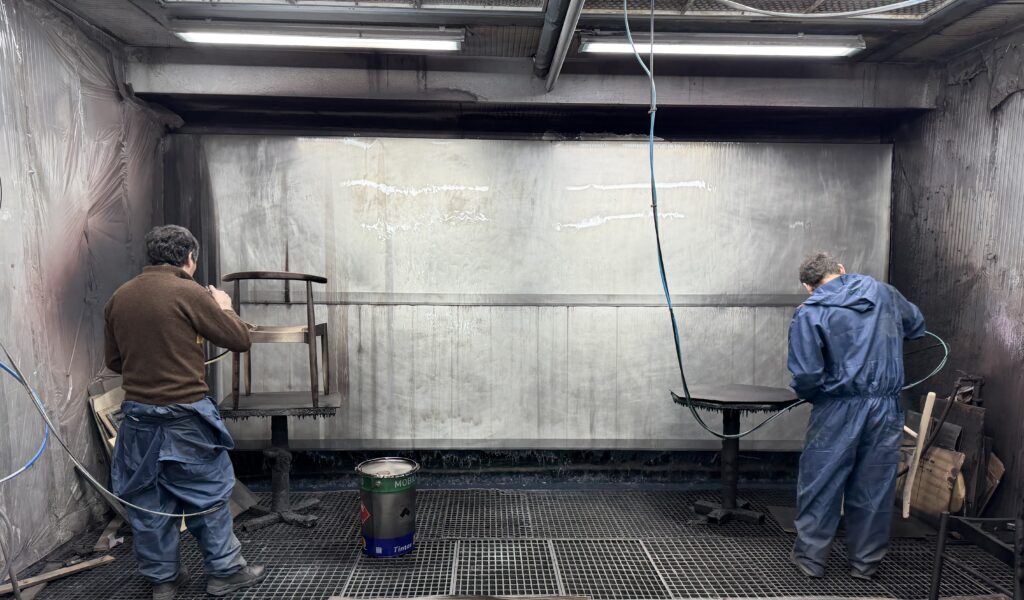
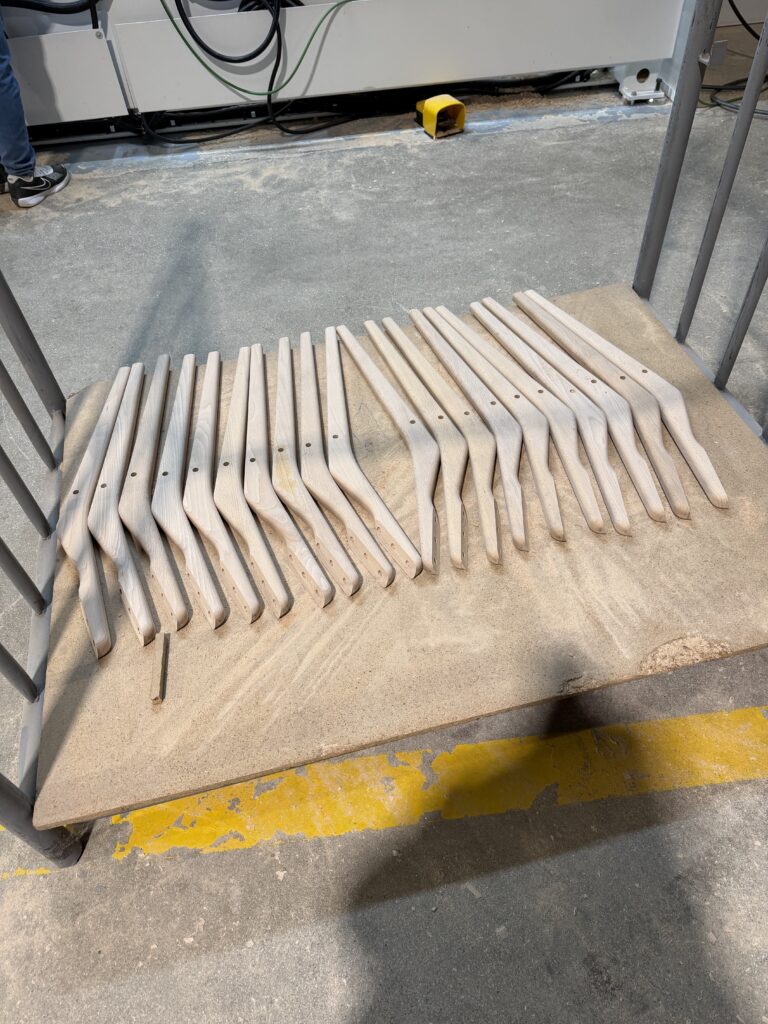
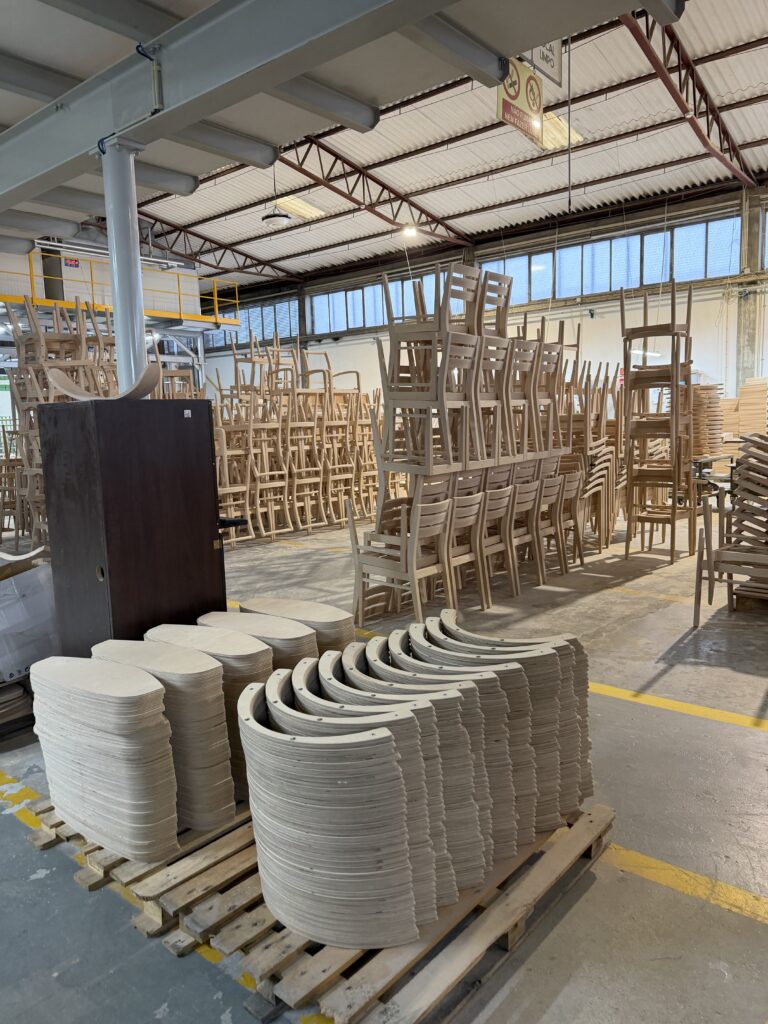
Beyond the finishing stage, the factory integrates comprehensive material recycling streams. Wood offcuts and sawdust generated during machining are carefully collected and redirected for reuse where possible. Coatings waste is also managed responsibly, ensuring that materials are captured and processed rather than sent directly to landfill.
By working closely with manufacturing partners who prioritise these practices, we are able to support more efficient use of raw materials and reduce unnecessary waste throughout the production cycle. This collaborative approach allows us to move toward a more responsible and increasingly circular model of furniture production.
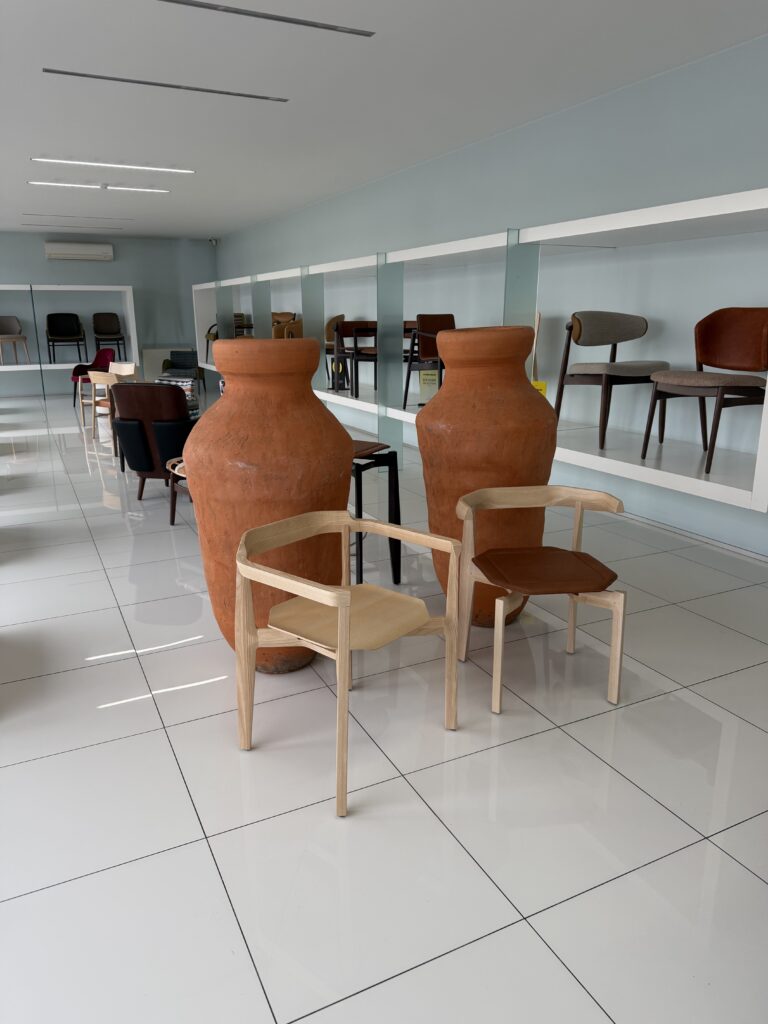
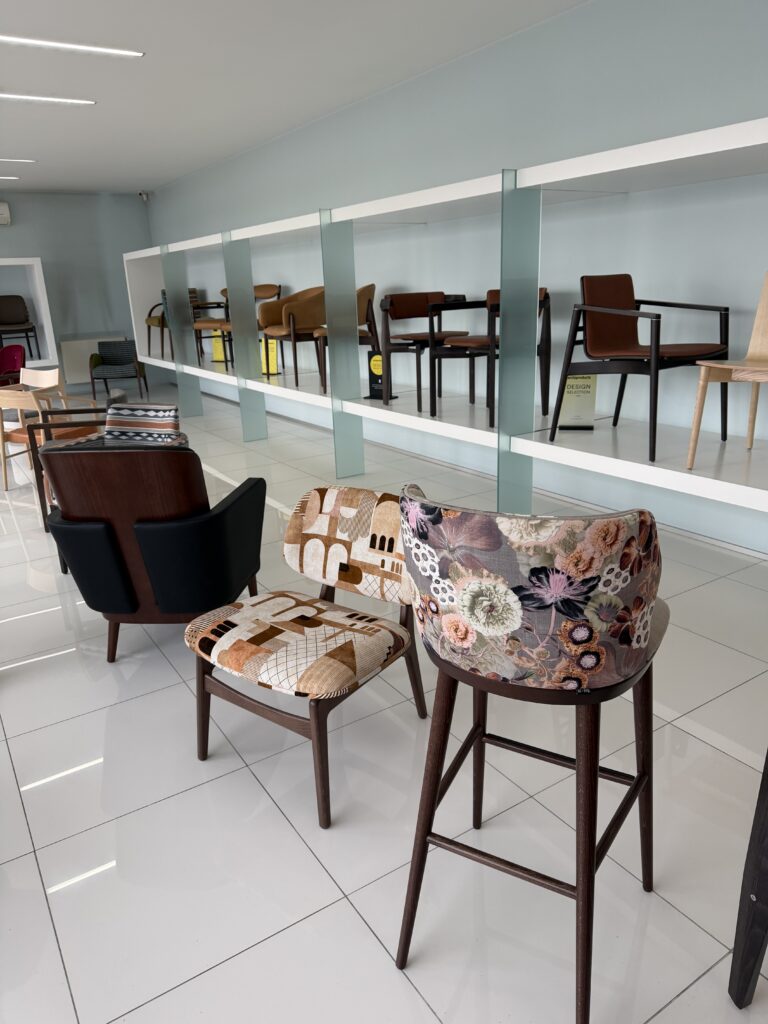
Sustainability is not achieved through one single solution. It is the result of considered decisions made at every stage of the process—and strengthened through partnerships built on shared values and continuous improvement.